What is School ERP Software and Why Every School Needs It in 2026
Introduction
The education sector is rapidly embracing digital transformation, and schools are no exception. In 2026, managing school operations efficiently is no longer possible with manual registers, spreadsheets, and paperwork alone. This is where School ERP Software becomes essential.
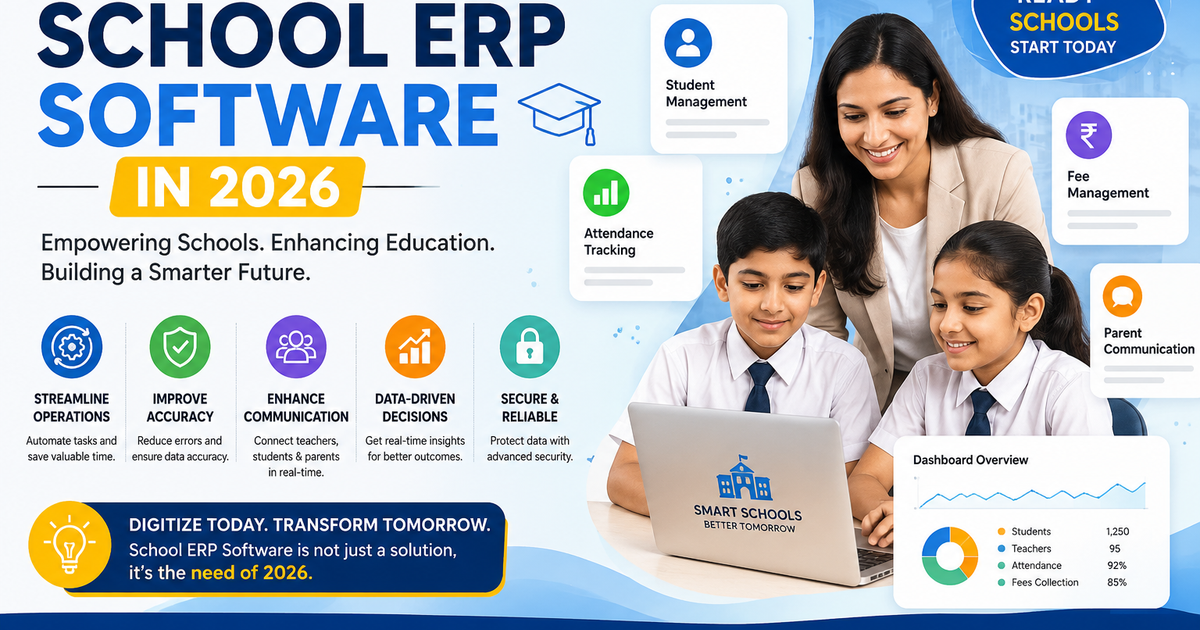
A School ERP (Enterprise Resource Planning) system is a comprehensive digital platform that automates and manages various school operations, including admissions, attendance, fee collection, examinations, communication, transportation, and academic management. By integrating all school functions into a single platform, ERP software helps educational institutions save time, improve efficiency, and deliver a better experience for students, parents, teachers, and administrators.
In this article, we will explore what School ERP software is, its key features, benefits, and why every school should invest in a modern ERP system in 2026.
What is School ERP Software?
School ERP Software is a centralized management system designed specifically for educational institutions. It connects different departments and automates daily administrative and academic tasks through a cloud-based digital platform.
Instead of managing separate systems for attendance, fees, examinations, and communication, schools can access everything from a single dashboard.
A modern School ERP typically includes:
- Student Information Management
- Attendance Tracking
- Online Fee Management
- Examination and Result Management
- Teacher and Staff Management
- Parent Communication Portal
- Transport Management
- Library Management
- Timetable Management
- Mobile Applications for Parents and Staff
The goal is to simplify school management while improving transparency and productivity.
Why School ERP Software is Important in 2026
The educational landscape is becoming increasingly technology-driven. Parents expect real-time updates, teachers require efficient tools, and administrators need accurate data for decision-making.
School ERP software addresses these needs by creating a smart and connected educational environment.
1. Complete Digital Transformation
Schools are moving toward paperless operations. ERP software digitizes records, reports, attendance registers, fee receipts, and communication channels, reducing dependency on manual processes.
2. Improved Administrative Efficiency
Administrative tasks often consume significant time and resources. School ERP software automates repetitive tasks, allowing staff to focus on strategic and educational activities.
3. Real-Time Data Access
Administrators can access important information instantly, including student records, fee status, attendance reports, and academic performance.
4. Enhanced Parent Engagement
Modern parents expect transparency and timely communication. ERP systems provide parents with real-time notifications regarding attendance, homework, examinations, fees, and school announcements.
5. Better Decision Making
Advanced analytics and reporting tools help school leaders make informed decisions based on accurate data rather than assumptions.
Key Features of School ERP Software
Student Information Management
Maintain complete digital records of students, including admissions, academic history, attendance, and personal information.
Attendance Management
Track attendance digitally using mobile applications, RFID systems, or biometric integrations. Parents receive instant notifications about student attendance.
Fee Management System
Automate fee collection, generate receipts, track pending payments, and provide online payment options.
Examination Management
Schedule examinations, generate report cards, calculate grades automatically, and analyze academic performance.
Communication Portal
Facilitate seamless communication between schools, teachers, students, and parents through notifications, messages, and announcements.
Staff and Payroll Management
Manage employee records, attendance, payroll processing, and leave management efficiently.
Mobile Accessibility
Modern ERP systems provide dedicated mobile apps, allowing users to access information anytime and anywhere.
Top Benefits of School ERP Software
Increased Productivity
Automation reduces administrative workload, allowing staff and teachers to focus more on education and student development.
Reduced Errors
Manual data entry often leads to mistakes. ERP software minimizes human errors and ensures data accuracy.
Cost Savings
By reducing paperwork and administrative overhead, schools can significantly lower operational costs.
Better Security
Cloud-based ERP systems offer secure data storage with backups, protecting sensitive information from loss or unauthorized access.
Improved Transparency
Parents, teachers, and administrators can access relevant information in real time, increasing trust and accountability.
Faster Communication
Instant notifications and updates eliminate communication gaps between schools and parents.
How School ERP Benefits Different Stakeholders
For School Administrators
- Streamlined operations
- Automated reporting
- Better resource management
- Improved decision-making
For Teachers
- Simplified attendance marking
- Easy grade management
- Efficient lesson planning
- Reduced paperwork
For Students
- Access to assignments and academic records
- Better learning experience
- Improved communication with teachers
For Parents
- Real-time updates
- Online fee payments
- Attendance notifications
- Academic progress tracking
Emerging Trends in School ERP Software for 2026
Artificial Intelligence Integration
AI-powered ERP systems can provide predictive insights, identify at-risk students, and automate routine administrative tasks.
Advanced Analytics
Schools can use data analytics to monitor performance trends and improve educational outcomes.
Mobile-First Experience
Mobile applications are becoming the primary way parents and teachers interact with school systems.
Cloud-Based Infrastructure
Cloud technology enables secure access from anywhere while reducing infrastructure costs.
Enhanced Cybersecurity
With increasing digitalization, modern ERP systems are implementing stronger security measures to protect sensitive school data.
Why Schools Should Choose Edubreezy School ERP
As schools continue their digital transformation journey, choosing the right ERP solution becomes crucial. Edubreezy School ERP is designed to simplify school management through a comprehensive and user-friendly platform.
Key advantages of Edubreezy include:
- Easy-to-use interface
- Complete school management solution
- Online fee management
- Attendance automation
- Examination and result management
- Parent communication portal
- Mobile accessibility
- Secure cloud-based infrastructure
- Real-time reporting and analytics
Edubreezy empowers schools to operate more efficiently while improving communication and enhancing the overall educational experience.
Conclusion
In 2026, School ERP software is no longer a luxury—it is a necessity. Educational institutions that adopt modern ERP solutions gain a significant advantage through improved efficiency, better communication, enhanced transparency, and data-driven decision-making.
Whether it is managing student records, collecting fees, tracking attendance, or engaging parents, a School ERP system simplifies every aspect of school administration.
For schools looking to embrace digital transformation and deliver exceptional educational experiences, investing in a reliable solution like Edubreezy School ERP is a smart step toward the future.
Written by Ritesh Singh
EdTech Professional & Consultant specializing in school technology, ERP solutions, and digital transformation. Helping educational institutions leverage technology to improve efficiency, engagement, and growth.